
5 reason website maintenance is important

Website maintenance is important to any business, regardless of size. Your website is a worldwide window into your business and it can have a big impact on how the value of your product or service is perceived. A well-maintained website is critical for real-time service industries. All businesses need regular website maintenance to attract and retain customers, maintain search engine rankings and present new information, products and services to the public. Website maintenance is also required to maintain the value of the website over time.
1.Your website is a public reflection of your corporate image. A poorly maintained website with lots of errors, broken links, dead pages and outdated information projects a sloppy corporate image and can cause business to decline over time. Routinely examine the look and feel of your website and update it to match your corporate image. Check and fix broken links, poor grammar and spelling mistakes as quickly as possible — preferably before a customer brings them to your attention.
2.Website maintenance is critical to search-engine rankings. Websites with old content rank lower in search engine listings. Some search engines, including Google, check your page’s “if-modified-since” HTTP header to determine whether it is worth crawling. Failing to make frequent modifications could cause you to be pushed below active competitors in the listings and cost you business over time.
3.If you are using a content management system (and you really should be) or any web-based software, then it is vitally important to keep it updated with the latest security patches and bug fixes. You don’t have to be running an e-commerce site for hackers to want to break into your website. Often times, hackers will break into a website and upload Trojan and malware for use in their other attack schemes.
One of the primary ways hackers gain access to a site is through outdated software. As security patches become available, hackers will try to take advantage of websites that are not pro-active in updating the software on their sites. The last thing you want is for your visitors to get infected by software downloaded from your site. If Google detects malware on your website, they will likewise delist your site until you get it fixed.
4.Your website-maintenance activities need to cover some business-critical key areas. These include copy production, quality control, publishing, feedback monitoring, performance monitoring, infrastructure maintenance, routine maintenance, change control and risk control. For risk management, you need to have a business-continuity plan in place for your website and ensure that your hosting service provider has a backup and maintenance plan that is in line with your own business service levels, especially if you have a real-time or mission-critical website.
5.A well-maintained website attracts new customers and maintains the interest levels of existing customers. Your website should be customer centered and kept relevant by routinely refreshing the content and ensuring that customer contact points are in good working order. Routinely check that contact forms work, address and phone number listings are updated and products, services and price lists are current and correct.
What is SEO?
Search engine optimisation refers to the process of improving the position that your website appears at in the “organic” search results returned by sites such as Google.
As a general rule of thumb, sites that appear higher up in the results will get more traffic to their pages, and so potentially more business.
Basic things you need to know
Linking
PageRank is a number scored out of 10 that is given to your website based on inbound and outbound links, and helps search engines to verify how trustworthy your site is. Linking between sites allows “link juice” to be carried through, so if your site is linked to by a site with a good PageRank, link juice will be carried forward to your site, improving your ranking.
While you cannot generally control the inbound links to your site (and Google disapproves of link farms and other artificial ways of linking), there are some steps that can be taken to improve your PageRank score. Ensure that your site is linked to from your social media content, most notably Google+, and attempt to get listed on free open directories such as DMOZ or professional bodies associated with your market.
Keyword rich content
They browse your website (and everyone else’s) to identify the actual copy written on the page along with things like use of key words and phrases. This data is then used to determine the relevance of your site when someone enters a keyword or phrase into Google, Bing or any other search engine.
With this in mind, you need to consider the search habits of your target audience, and ensure that the terms they might use to find your business are reflected on your pages. For example, if you offer physiotherapy services, your website content should include words or phrases that people may search for, such as “massage”, or specific problems such as “lower back pain”. Remember that text included in images cannot be crawled by spiders, although alternative text associated with the images is, so you may wish to revisit the design of some of your pages.
A useful free tool for identifying your keywords is Google AdWords keyword tool. This is designed to help prospective advertisers identify the most relevant keywords for their chosen market, but it is also very helpful when writing copy for your website.
Once you have identified your keywords, ensure that they appear in the body of your pages, as well as in metadata of your page, which is the unseen data that gives the spiders key information about your page. This can either be done by yourself, with a little knowledge of HTML and access to your server, or it can be done by your web designer.
New content
The rate at which search engine spiders crawl your site is in part determined by how frequently the content of your pages change. With this in mind, you may want to create a monthly task to change text, images, or add or remove pages, in order to ensure that your content is regularly updated.
Alternatively, set up a blog on your site and allocate time each day (or week) to write or curate some content that is relevant to your target market. This might seem onerous or daunting, but once you get into the habit it becomes second nature and shouldn’t take more than about half an hour a day. For reference material – which should always be credited – Google Alerts to keep up to date with online content that matches your keywords.
Update SEO
The algorithms used by Google and Microsoft to determine the order of their results are subject to tweaks and improvements as they attempt to deliver ever more accurate search results. As a result, SEO is something of a moving feast and it pays to stay up to date. That said, these basic principles are unlikely to change significantly as they are key determinants of your ranking.
Today’s marketers need to do more with less. They need to connect with their audience in a highly personalized way, while staying on budget. Marketers that can do this – connect with their prospects and customers in a highly targeted way – will be successful in delivering ROI and revenue back to the business.
Email marketing is by far the most effective way of directly affecting your audience and actually grow your business.
And we have 5 points here to prove it.
1.Reduced Time & Effort
Take a moment to think about the time and effort involved in structuring a direct-to-consumer or direct business-to-business campaign using one of the two most common offline direct marketing communications techniques:
Print Postal Mailings: You’ll need to allow time for a designer to create the mailing, typically through several lengthy revisions. Then you’ll need to allow time for the print mailing to be printed, cut and, if necessary, stuffed into envelopes. There will be time while the marketing collateral is being transported via the postal system and then time while you wait for the consumer to retrieve it from the mail box.
Telesales Campaigns: In addition to having to construct a telesales script, you’ll have to wait the time out while your sales agents dial through cycled call attempts to all of the sales leads or customers on your target list.
2.More Frequent Communications
Because email takes less time to create and send than other marketing and advertising channels do, you can communicate with your customers more frequently. Instead of only being able to send them a flyer or catalog once a month or once a quarter, you can easily send them offers once a week. You could, of course, send them email even more frequently than that if their email activity supports making that decision. You may want to note, however, that it’s one of the typical email marketing best practices to not send customer emails more than once a week.
3.Real-Time Messages
Because a marketing email can be completed in just a few hours, you can literally send “day-of” messages to help reduce stock or promote a limited time special as needed. You can even send unique real-time messages to customers that arrive on their birthdays or anniversaries. With email marketing, short time frames are your friend, not your enemy.
4.Test Marketing Messages
With email marketing, it becomes incredibly easy to see what graphics, headlines, offers and even colors your users and customers will respond to.It’s incredibly simple to simply send one version of an email to one part of your list and a second version of an email to a different part of your email list. Then, through the very precise tracking tools that email marketing offers, you can figure out which marketing message worked better to convert sales or user actions. We’ll talk in detail about both the great tracking tools that email marketing offers as well as common types of email testing later on in this book.
5.Exponentially Better Ability to Track Sales and User Engagement
Well-developed email marketing platforms such as Comm100 Email Marketing can provide tracking information on how many people opened an email, how many people clicked a link in an email, which specific link within the email was clicked, how many people complained that an email was spam or unsubscribed and, of course, whether your email even made it into your recipient’s inbox.Combine that with a business’s ability to track sales back to a source and you can identity customer engagement and response through an entire cycle with clear, easy-to-understand metrics.
Studies show people will only wait seven seconds for your website to load before clicking the dreaded back button. It’s hard to get people to come to your site and with so many options it’s highly unlikely once someone leaves they’ll ever come back. That’s why it’s important to have a fast loading website.
A fast loading website will ensure your visitors get a glimpse at your content. The more people who see your website, the more people you’re likely to convert into customers.To ensure your website loads as fast as possible it’s important you can include as few images and other files as possible on each page and make sure those files are optimized.
Another thing that can effect the speed at which your web pages load is the coding technique. Some website builders rely heavily on communicating with their servers before loading your page. Some free and low cost competitors cram as many websites as they can onto a single server.
Can the speed of your website really have that much of an effect on your sales? Even if your site isn’t loading too slowly, can it still be improved? And how does Google factor into all of this? You might be surprised.
Nearly half of web users expect a site to load in 2 seconds or less, and they tend to abandon a site that isn’t loaded within 3 seconds. 79% of web shoppers who have trouble with web site performance say they won’t return to the site to buy again and around 44% of them would tell a friend if they had a poor experience shopping online.
This means you’re not just losing conversions from visitors currently on your site, but that loss is magnified to their friends and colleagues as well. The end result – lots of potential sales down the drain because of a few seconds difference.
Why branding is so important, especially for a website? Your website needs to cover all the necessary factors in order to enhance your brand. Lets see those factors:
Now let’s analyze each factors separately:
Imagine two men standing side by side. One is casual dressed , a pair of jeans , sneakers and t-shirt , the other one in a good-looking suit and a tie. Isn’t the one in the suit more serious and formal?
This is how your website branding can begin – through a high-quality design. You can present the content of your website in the simplest way possible , so it would give only information. If you wrap it though in a great design your visitors will pay more attention and get a feeling of seriousness from your website because of the good looks
The user experience at your site must always provide the visitor with the answers that they need. It is irritating to browse in a website and cannot find the information you need. Making the site look good is step one, but making it simple and concise is the second step.Once you have their attention, you have to ensure that you give them the information.
It is really important to provide your visitors extra information about your services and/or products that way you know, you have cemented a place in the visitor’s mind. For example if you run a cleaning company and you have in your website reviews of your services or comparisons with other companies the visitors will view this added information positively .
Create something special, something different, something that will attract the visitors eye. If a specific layout of a website worked for your other companies doesn’t mean it ll work for you too. Avoid templates , avoid same designs , same techniques. The goal of website branding is to build a following of the brand based on the visitors’ experiences.
Did you know that social media marketing has a 100% higher lead-to-close rate than outbound marketing? Or that 84% of B2B marketers use social media in some form? No matter what you sell and who you sell it to, using social media as a marketing tool can help you grow your brand and pad your wallet.
At this point in the game, not having an active social media presence is kind of like pulling out a flip phone at a business meeting and then not understanding why your boss keeps giving Brad all the new accounts.But some people still own flip phones, and some people dig in their heels and say, what is social media marketing going to do for me? Do I really need it? Yes. Yes you do — and here are some of the most compelling reasons why:
The Importance of Social Media for Web Traffic
1.Social media posts can be used to drive targeted traffic. Creating a new page on your site is like taking a really great selfie. You want the world to see it and bask in its brilliance, but you don’t want to beg for attention (or worse, pay for it). That’s why for selfies and landing pages, well-placed social media posts can make all the difference. We’ve seen a single link on Reddit drive over 20,000 visitors in one weekend and links submitted to StumbleUpon can take a page that was consistently earning a handful of visitors a day and increase that number to hundreds.
2.Using social media for business boosts your site’s SEO. Search engine crawlers know which pages are consistently earning traffic and which are just floating out there, forgotten and ignored. A killer content strategy for SEO is the most important part of earning top spots in search engine rankings, but driving traffic to your optimized pages will cause them to climb much faster in the search engine results pages (SERPs).
Social Media is THE BEST Tool to Connect with Consumers & Industry Leaders
If you’re doing it right, social media will lead to real relationship building. Part of what makes things like Twitter and Instagram marketing so cool is the interaction you get to have with your customer base — you can read their tweets and status updates to get insights into their daily lives (and maybe adjust your marketing strategy as a result). What products are they buying and why? What are they doing on the weekend? What kind of posts do they love to share, and from what websites?You can also use social media as a tool for connecting with complementary, non-competing businesses, thought leaders and tastemakers in your space, as well as journalists who cover your industry. Sometimes, becoming besties starts with a simple retweet.
1.Users are receptive to your messages. People view Twitter and Facebook as social networks, not marketing machines. As a result, they’re less likely to see what you post as an advertisement and will be more likely to hear what you have to say. This translates to serious web traffic when you link to your site and posts that market themselves as your friends and followers share what you’ve posted.
2.Social media ads allow targeting and retargeting. One of the reasons social media is important is because of the highly customizable nature of social media ads. Facebook ads, for example, allow you to target users by things like location, education level, industry and even purchase history and the pages they’ve liked. You also have to the option to install a Facebook pixel on your site and use it to retarget the users who visit you — these people are far more likely to convert into solid leads and sales!
3.Social media can help you get noticed at events, and even generate earned media coverage. Whether your business is sponsoring a charity fundraiser or attending a major trade show, there’s no better way to leverage your presence than with the help of social media. In fact, we once sent a tweet during CES that lead to a client getting a feature article written about them in Wired magazine (check out our guide to marketing your business at trade shows and events to learn how you can achieve similar results).
The Importance of Social Media Marketing for Sales and ROI
1.Social media marketing will get you more sales. Did you know that 70% of business-to-consumer marketers have acquired customers through Facebook? Or that 84% of CEOs and VPs say they use social media to help make purchasing decisions?
Not surprisingly, when you stay in front of your customer base, they’re more likely to buy from you when they need the products you sell. Social media marketing doesn’t just keep your company’s name in front of potential buyers, but it also gives you the opportunity to constantly give them incentives to buy. Try sharing coupon codes, with a unique code for each social channel – you may be surprised at which social network drives the most sales.
2.You’ll find customers you didn’t know existed. If you set up streams to follow keywords in Twitter (Hootsuite makes this simple), you can find people who are looking for the products you sell and direct them to your site. Using Twitter for marketing is great that way – telling people who want your products how to get them from your company is just an @ away.
3.Customers you didn’t know existed will find (and buy from) you. In the process of marketing with Facebook, you’ll probably join a ton of groups related to your products, industry and customer base. By posting links in these groups, you’ll help influence customers to check out your site. Answering questions on Quora is another option. Post a link today, and two weeks/months/years later you might see a sale from it.
Why is Social Media Important?
Why is social media important to businesses? Because your brand doesn’t really exist online if you’re not represented across all social channels – and regularly interacting with your followers, journalists who cover your industry, thought leaders and tastemakers, etc.
Here’s one very important reason you may not have considered — it’s fun! Hosting a Twitter chat to celebrate a new product launch, getting your geek on while you A/B test Facebook ads, or sharing pop-culture polls for your followers to weigh in on — these are all activities that build brand awareness, boost web traffic and lead to loyal customers. But unlike many traditional marketing tactics with the same goals, these tasks are actually fun in addition to driving real value for your company.
It may come as a surprise to you that the majority of e-commerce websites do not have a business blog. While there are a lot of sources that speak to why general businesses should have a blog, very little has been targeted at e-commerce sites. What is the point of having a blog when your primary objective is to set up shop online?
It is no secret that business blogs do a lot for increasing online traffic to standard website platforms, but they also have several other benefits that specifically benefit e-commerce sites. What is even better is the fact that because many e-commerce sites are not taking advantage of having a business blog, this can be the one aspect that sets your site away from the rest.
If you’re not convinced and don’t know if the work is worth it, consider some of the following reasons a blog would be beneficial for an e-commerce company:
1.Address a problem or task readers may have
Try to empathize with a task or problem your reader may be facing. I do this all of the time when I try to create blog posts; it is a great starting point to address an issue and share your experience dealing with it.Product pages are oftentimes to the point because they have to be, so that is why blogs are your space to really address different problems and questions.
2.Inform (and VALUE) your read
If you are convinced that to help business boom it is a good idea to have a blog (and arguably necessary), then the next step is to put your readers at the center of your purpose.
In order to gain a following for your blog, you need to be sure you are producing content that is not only enjoyable to read, but also offers information that will keep your readers returning for more. Most people will decide whether they want to continue reading by the first line of your post, while others may skim and find that your overall organization doesn’t seem worth their time to delve into. If you are a little stuck with how to get started, or even contemplating what your e-commerce site may want to blog about think about the following…
3.Blogs are important for SEO to get your content crawled

To start with a very basic understanding of SEO and why it is so important, search engine bots ultimately have two functions–crawling content & building an index. This allows them to provide answers to Internet users by determining relevancy and providing results. It is the goal of an e-commerce site to rank highly on search engines so that when Internet users are searching for a product, your site is one of the first options in front of the eyes of shoppers.
Blogs are essential in the process of getting content crawled by search engines because through links and content, search engine “crawlers” or “spiders” can reach the many billions of interconnected documents. Because blogs often contain links, specific phrasing, and content related to your e-commerce site, this can actually aid in getting your online content crawled more effectively. Your blog posts will help drive traffic to your site because every time you write a post it is an additional indexed page that search engines associate with your business. If your content is valuable (which we will discuss next), than this can help you climb the SEO Google ranks.
4.Answer or start a discussion about a popular question
When trying to craft a post, it is nice to look at previous comments on other posts or look to social media accounts to try an answer a question that a follower or customer is having. Ultimately answering a question demonstrates that you actually care about your readers, and that asking questions is a good way to create an ongoing dialogue. It also shows that what you are writing about is something that is purposeful to help your reader and is emerging from his/her own struggles and interests.
This directly relates to the customer/seller experience and people usually feel more inclined to shop and purchase goods from a merchant that connects with and makes their customers a priority.
5.Share an experience or a relatable story
One thing that often separates an enjoyable post to read from one without much pizzazz is the ability for the writer to tell a story or share an experience. If you are writing a post and have a personal anecdote, customer story, or other experience to share make it your opening paragraph.Again, this draws readers into what you have to say and demonstrates that not only are you the expert writing about this particular topic, but you have first hand experience with it.
6.Without structure, you might come crumbling down
Lastly, structure can make or break a post. Do your best to use headings, bullet points, or begin new paragraphs when appropriate. People like being able to skim an article and decide whether or not it has what they are looking for. Don’t make it a guessing game. You should be in the game of spoon-feeding your reader to some extent. Make in known that you have a clear organization for addressing the topic.
And most importantly, what you are writing about, the opening of a blog post seals the deal for your readership. As I mentioned in the beginning, most of your readers decide if it is worth their time by the first line. This is even more reason to start it with a punch! If there is anything to reevaluate after finishing a blog post, go back and look at your opening sentence.
There’s nothing better for eCommerce email marketers than watching an email campaign consistently drive orders. And there’s nothing more aggravating than wondering why customers never open your emails.
There are so many moving pieces to an email campaign, send time, email design, list segmentation, etc. It can get anyone with low open rates thinking, where did I possibly go wrong?
If your open rates are floundering and your click rates are non-existent, your email campaigns aren’t generating revenue.
And without revenue from email marketing, where is it coming from?
But before you can get a stupendous, 60% open rate, let’s fix the issues at hand and grow your open rates.
If your shop is in the single digits or low double digits, we’ve put together a handy list of eight reasons why customers aren’t opening your emails.
– No-Reply Email Addresses
– Send Timing
– Buying Email Lists
– Sender Score
– Unsubscribes & Opting Out
– Subject Line
– Personalization/Email Design
– Mobile Optimized
No-reply email addresses are a trigger for spam filters. So one of the reasons your customers may not be reading your mail is because they’re not even seeing it in their primary inbox.
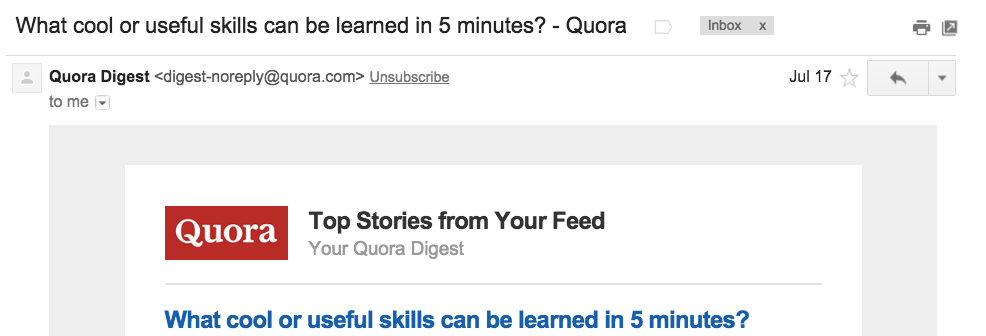
Even if the spam filter doesn’t keep your emails from the inbox, customers are less inclined to read no-reply emails.
You don’t want your customers to respond, so why would they want to read, open or even click?
If you insist on using a no-reply email address, follow Quora’s lead and make sure to include a ‘from-name.’
Not all send times are created equal. Some days and times receive much higher purchase rates than others.
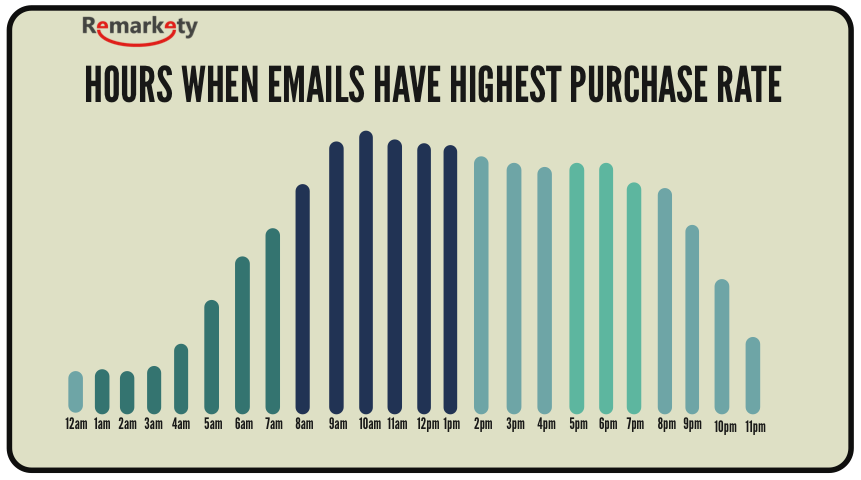
One reason people might not be opening your emails is because they aren’t looking at their inbox. Believe it or not, some people do separate themselves from their email once in a while.
Timing is also important when considering the frequency of your email sends.
You don’t want to overwhelm your customers by sending too often, but you should be sending at a consistent rate to maintain ongoing communication and avoid customers from becoming inactive or stale.
If you purchase your email lists, no customer gave you their email willingly and therefore are not motivated to read your emails.
Customers are also much more likely to flag your emails as spam, as opposed to just unsubscribing.

Also, if your list isn’t clean and segmented, it can contribute to low open rates.
If you send emails to customers that have been inactive for over a year, this can decrease your deliverability and open rates, too.
It sounds like common sense.
But many companies still insist on blasting all of their customers over and over and over again.
If you want your emails to be read, only send them to your engaged and active customers.
If you have a low sender score, your emails will get trapped by the spam filter.
In other words, they won’t make it to inbox.
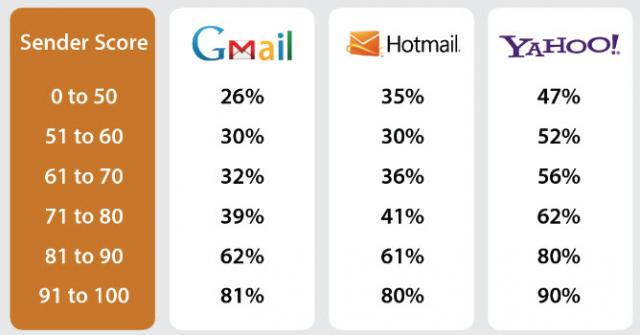
You will get a bad reputation with ISP domains and get marked across the board as a spammer.
That reputation will determine if you make it your recipients inbox unscathed and, even better, get opened and read.
Sometimes customers opt out of receiving all newsletters or marketing emails when they make their first purchase.
Or they unsubscribe from emails when they start receiving too many, too often.
There is not much you can do except find out why they unsubscribed so you can try to avoid making the same mistakes in the future.
One way to avoid immediate unsubscribes is by removing the ability for shoppers to unsubscribe when checking out from your store.
This box is automatically checked and usually says, “I don’t want to receive marketing emails.”
If new customers can immediately unsubscribe, they may never hear from your awesome company.
Another way to avoid unsubscribes is by spending some serious time creating useful and high quality emails.
If you give your customers a reason to open your email – with incentives or coupons – they have a reason to keep opening and clicking your emails.
These are probably the most important part of any email.
Subject lines are where first impressions are made.
If you have a subject line that ends up in the spam folder, they will never see it.
If you have a subject line that doesn’t attract your customer’s attention, they will never open it.
If you have a subject line that isn’t totally genuine, customers will never click.
Consider copying some of the “link bait” headlines you see on BuzzFeed or Mashable – assuming they’re genuine..
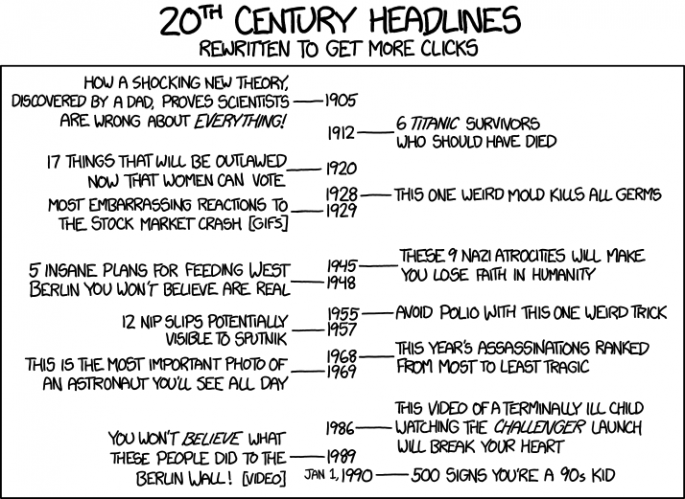
As much as we hate to say it, link bait subject lines work.
Make sure you craft unique and direct subject lines to capture the readers attention and for you email to stand out a crowded inbox.
If you’re not taking the time to personalize emails or making it relevant to a specific customer why should they take the time to read it?
Let’s say you sell aftermarket automotive parts.
You shouldn’t be sending deals on Camaro parts to a customer who buys parts for a Mustang.

Another example – pet food.
If you have a customer who repeatedly buys dog food, don’t send them a coupon for parakeet toys.
Personalization is especially important in subject lines or preheader text.
The body should also be personalized including the recipient’s name and maybe info on their last purchase.
But first think about why you are sending this email.
Is it clear what you want the reader to do? Do you want them to buy something, write a review or read something?
Whatever the call-to-action is, make it obvious. Throw in a big call-to-action button, but don’t get ridiculous.
Content is crucial and arguably the most important part of your email.
If it’s not relevant, timely or of interest to your customers, then they will not see it as valuable and worth their time or money.
According to Hubspot, 48% of emails are being opened on a mobile device.
Here’s the thing, 69% of people checking email on their phone delete the email if they have to constantly drag the screen back and forth to read an email.

As the number of people checking email on their phone continues to grow, a responsive email design becomes more critical, too.
A responsive email design simply means no matter what device an email is opened on, the email will automatically fit the dimensions of the device.
If the email doesn’t work on a mobile platform, people won’t bother reading it.
Make sure your email layout, design and images look just as good on a phone or tablet as it does a computer.
Also, make sure your images aren’t too big so they don’t take forever to load.
If you’ve tried to fix your emails by leveraging all of the above and your open rates are still low, take a look at your bounce rate.
If your bounce rate is high, you either have a lot of junky email addresses or email servers aren’t letting your email through to the inbox.
This can happen if your IP is blacklisted.
If your bounce race is low, then maybe you need to offer better incentives to increase open rates.
Ultimately, that subject line and preheader text is key and A/B tests will be a godsend for you.
Test two different subject lines with every campaign. Get creative!
Smartphones and tablets have changed the approach toward design and user experience. Before the proliferation of mobile devices with advanced web-browsing capability , web designers had only one primary challenge to deal with – keeping the same look and feel of their websites in various desktop computer browsers.
However, interacting with websites on smartphones and tablets is not the same as doing that on a desktop computer monitors. Factors such as Click versus Touch, Screen-size, Pixel-resolution, support for Adobe’s Flash technology, optimized markup and many more have become crucial while creating websites with Responsive Design
But, why is responsive design so important for your website? Before we understand that, we must understand what is “Responsive Web Design”.
Responsive Web Design (RWD) is an approach of laying-out and coding a website such that the website provides an optimal viewing experience — ease of reading and navigation with a minimum of resizing, panning, and scrolling — across a wide range of devices (from desktop computer monitors to mobile phones).
The designer creating a Responsive Design should ensure that the website’s navigation elements, screen-layouts, text, images, audio/video players and other UI elements re-adjust themselves on a variety of devices. Thus, one need not spend extra time and money in creating and maintaining one “mobile-site version” and another “desktop-site version” of her website.
Now, having understood what is Responsive Web Design, let us understand why Responsive Design is important while creating websites.

The notion that making a responsive website is expensive is just that, a notion. The fact is, while the cost to make a responsive website is somewhat more than making a conventional website, but the expenses to duplicate a website for mobile and other devices gets completely eliminated, as a result – that cuts total development costs, significantly. In addition to that, a responsive design cuts the total ownership cost, by means of taking away the effort to maintain different versions of a website i.e. a “desktop-version”, a “mobile-version”. Thus, in the long term, investing in responsive website design is the smartest decision.
Internet traffic originating from mobile devices is rising exponentially each day. As more and more people get used to browsing the web through their smartphones and tablets, it is foolhardy for any website publisher to ignore responsive web design. The “One Site Fits All Devices” approach soon will be the norm.
While, content is king and discoverability of content are foremost success metrics, it is the user experience that enables visitors to consume content on any website through the device of their choice and preference, anytime. Thus, responsive web design is about providing the optimal user experience irrespective of whether they use a desktop computer, a smartphone, a tablet or a smart-TV.
Responsive Websites are agnostic to devices and their operating systems. A responsive web design ensures that users get the best and consistent experience of a website on any device of the user’s choice and preference – be that the iPhone, the iPad, the smartphones running the Android OS, or the Windows OS and several others. As a result website owners and content publishers can need not exercise the option to build versions of their website for every popular device platform which they expect their audience might be using.
Thus, rather than compartmentalizing website content into disparate, device-specific experiences, it is smarter to adopt the responsive web design approach. That’s not to say there isn’t a business case for separate sites geared toward specific devices; for example, if the user-goals for your mobile content-offering are limited in scope than its desktop equivalent, then serving different content to each might be the best approach.
But that kind of design-thinking does not have to be our default. Now more than ever, digital content is meant to be viewed on a spectrum of different experiences. Responsive web design offers the way forward.
Trends come and go, whether you’re talking about fashion, music, or web design. When it comes to having a great website, it’s important to keep it up to date with the latest design. Even looking at a website that seemed amazing a few years ago, it can now seem dated and out of step with today’s best sites. Worse yet, it might not even function properly on the mobile devices more of us are using for browsing on the go.
Here are seven of the big web design trends that are already out of date, and why you should avoid them on your site:

Whether you are inviting visitors to like you on Facebook, join your newsletter, enter a competition, or chat with a live representative, nobody wants to see your popup. They can be very annoying for visitors, and can detract from the great website they do want to see.

It used to be a given that any image was better than no image, so lots of sites started filling up with stock photos. However, this is no longer the case. Every visitor can spot a stock photo a mile away and they’ve learned to ignore them, knowing they don’t represent what you really do. Instead, ditch the overused and unoriginal stock photography and replace it with real images of your company’s work.

Although Flash used to be the big web design trend, it’s rapidly becoming an internet dinosaur thanks to smartphones. Some of the most popular mobile devices simply don’t support Flash. It’s also not Google friendly, so a Flash intro can hurt your search engine optimisation efforts.

Including a video on your website is fine; having it start playing automatically is not. Whether you have it on your homepage or any other page of your site, you should never force visitors to watch your videos. Like popups, it can cause major annoyance and even send a potential customer running to your competition.

The huge banner trend is the bell bottom trousers of web design. A few sites might be able to pull them off, but for most it’s just not a good look. Many visitors can feel they’re overbearing and take up valuable space that could be used for content.

Visitors want you to get to the point clearly and quickly. Bullet points are a great alternative to long paragraphs, especially as they make it easy to skim your content on a mobile device.

Like popups, these can make your visitors very annoyed and distract from the content you want them to focus on. Whatever you have included, whether it’s social feeds, promotions, news, weather, or a photo gallery, don’t animate it. It will be eye catching, but for all the wrong reasons.
